

THE National Information and Communications Technology Authority (NICTA) is encouraging businesses across Papua New Guinea to make greater use of technology to improve productivity, safety and efficiency.
NICTA made the call following Ok Tedi Mining Limited’s deployment of two ArcSAR Neo slope-monitoring radar systems at its mining operations.
The technology provides detailed monitoring of mine slopes and ground conditions, helping identify and manage geotechnical risks earlier. It can also continue monitoring during network interruptions.
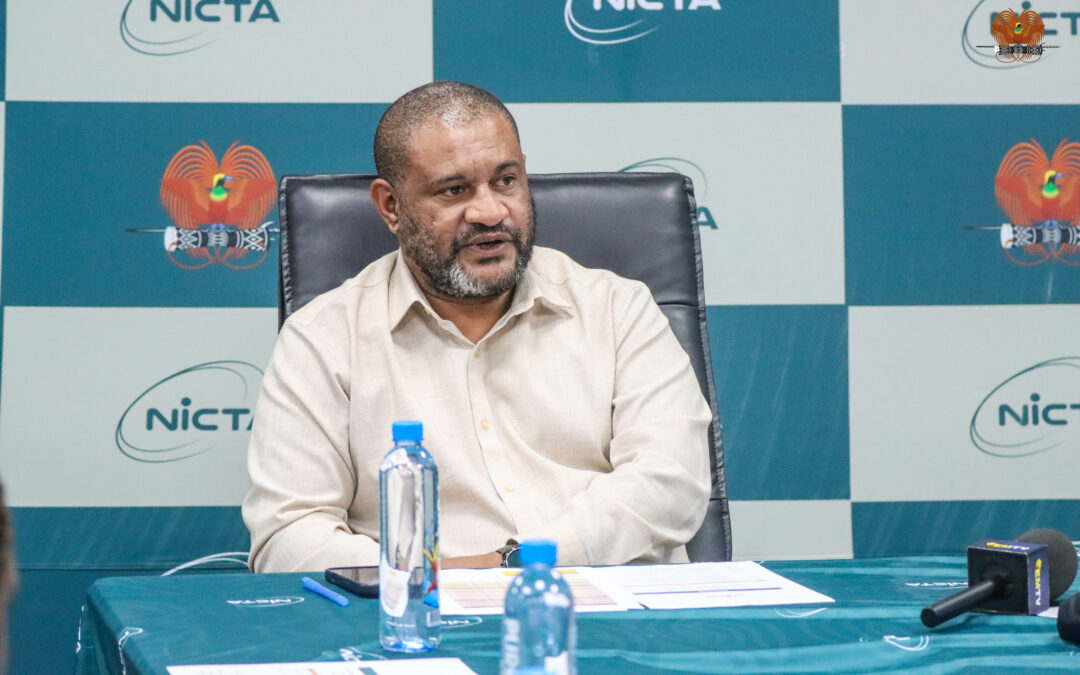
NICTA chief executive officer Lume Polume said the investment showed how advanced technology could be applied to address real operational challenges in PNG.
“I commend Ok Tedi Mining Limited for embracing advanced digital technology and demonstrating what is possible when technology is placed at the centre of industrial operations,” Mr Polume said.
He said technology was becoming increasingly important for industries operating in remote parts of the country, where reliable connectivity and access to information can affect how businesses operate.
Mr Polume said businesses were increasingly looking at technologies including satellite connectivity, fibre, advanced wireless networks, Internet of Things systems and artificial intelligence to support their operations.
He said connectivity was no longer only about people accessing the internet or making phone calls.
“It is increasingly about connecting machines, sensors, vehicles, monitoring systems, artificial intelligence and business platforms in real time,” he said.
NICTA has also confirmed that PNG is ready to license 5G mobile services, with the 2.6 GHz and 3.5 GHz spectrum bands assessed and cleared for licensing.
Mr Polume encouraged mining companies, manufacturers, financial institutions, agriculture businesses, logistics operators and other industries to consider how technologies such as 5G could be used in their operations.
“With 5G now opening a new chapter for Papua New Guinea, businesses and industries must begin thinking beyond connectivity for people and look at connectivity for machines, infrastructure and intelligent systems,” he said.
He said the use of technology could help businesses reduce downtime and operating costs while improving safety and the way decisions are made.
NICTA is also working on changes to its regulatory and institutional framework to keep pace with developments in the ICT sector.
Several legislative and regulatory reforms are expected to progress to the November 2026 Parliament sitting, subject to the required government and parliamentary processes.
Mr Polume said NICTA’s role was to provide a regulatory environment that gives businesses certainty while protecting consumers and allowing room for innovation.
He said the growth of PNG’s digital economy would require cooperation between Government, regulators, telecommunications operators, technology providers and businesses.
Mr Polume said Ok Tedi’s investment showed that PNG businesses could adopt technologies developed overseas and apply them to local operating conditions.
NICTA will continue engaging with industries to understand their connectivity needs as PNG prepares for greater use of digital technology across mining, agriculture, logistics, aviation, financial services, education, health and government.