

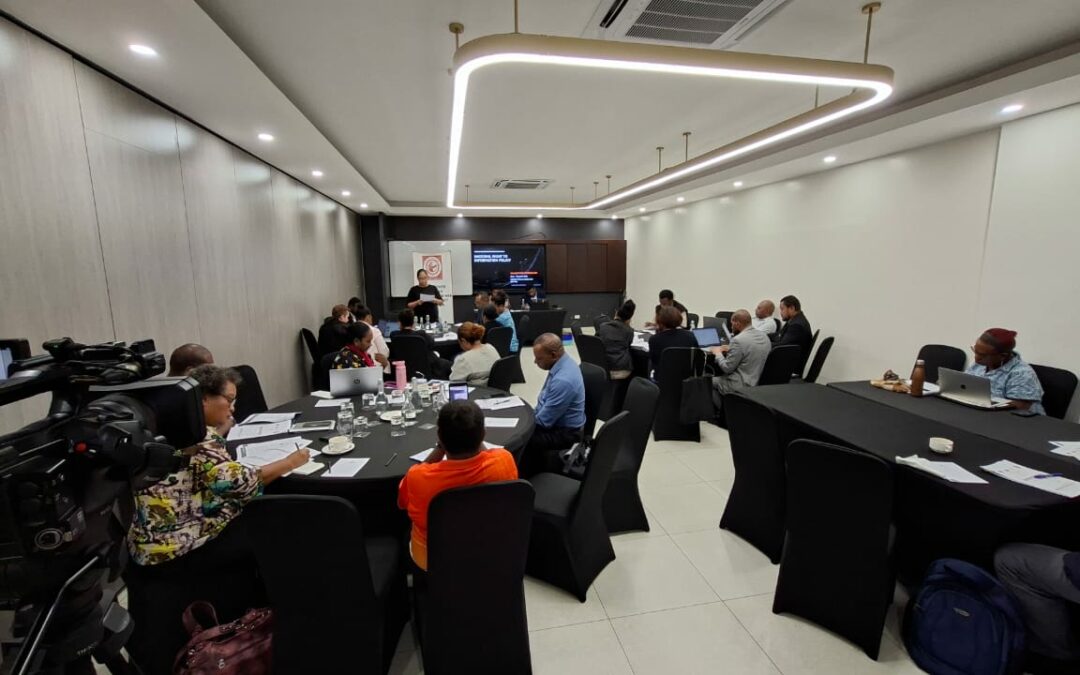
The Department of Information and Communications Technology (DICT), in partnership with Transparency International PNG (TIPNG), on Thursday, 11 June 2026, led the official validation of Papua New Guinea’s draft National Right to Information (RTI) Policy at the Lamana Hotel, Port Moresby.
The landmark policy framework is designed to legally empower citizens to access government-held information, strengthen accountability in public administration, and dismantle long-standing cultures of secrecy across state agencies.
Opening the workshop, DICT Deputy Secretary for Policy Planning and Emerging Technology, Mr. Flierl Shongol, emphasized that technology alone cannot resolve governance challenges.
“The real substance of a digital society relies on how information is managed, accessed, and utilized to empower our people,” Mr. Shongol stated.
“When citizens have the right to access information, it builds trust between the government and the public… and it directly combats corruption by opening up processes to public oversight.”
TIPNG Chief Executive Officer, Ms. Arianne Kassman, reinforced this message, stressing that access to public records must be recognized as a democratic right.
“The Right to Information is not just a legal concept; it is a fundamental pillar of any functioning democracy. Without access to information, citizens are left in the dark, and accountability cannot truly exist,” she told attendees.
The United Nations Development Programme (UNDP), a key partner in PNG’s anti-corruption efforts, highlighted the importance of transparency for sustainable development. Dr. Alma Sedlar, Chief Technical Advisor for UNDP’s Anti-Corruption Unit, cautioned that validation is only the beginning.
“A policy is only as good as its implementation framework and the political will behind it,” Dr. Sedlar noted, urging stakeholders to align the final text with international standards such as the United Nations Convention Against Corruption (UNCAC).
With the validation process now complete, the draft RTI Policy will undergo final technical refinements before submission to the National Executive Council. If endorsed, it will establish the legal foundation for Papua New Guinea’s first comprehensive Right to Information legislation.