

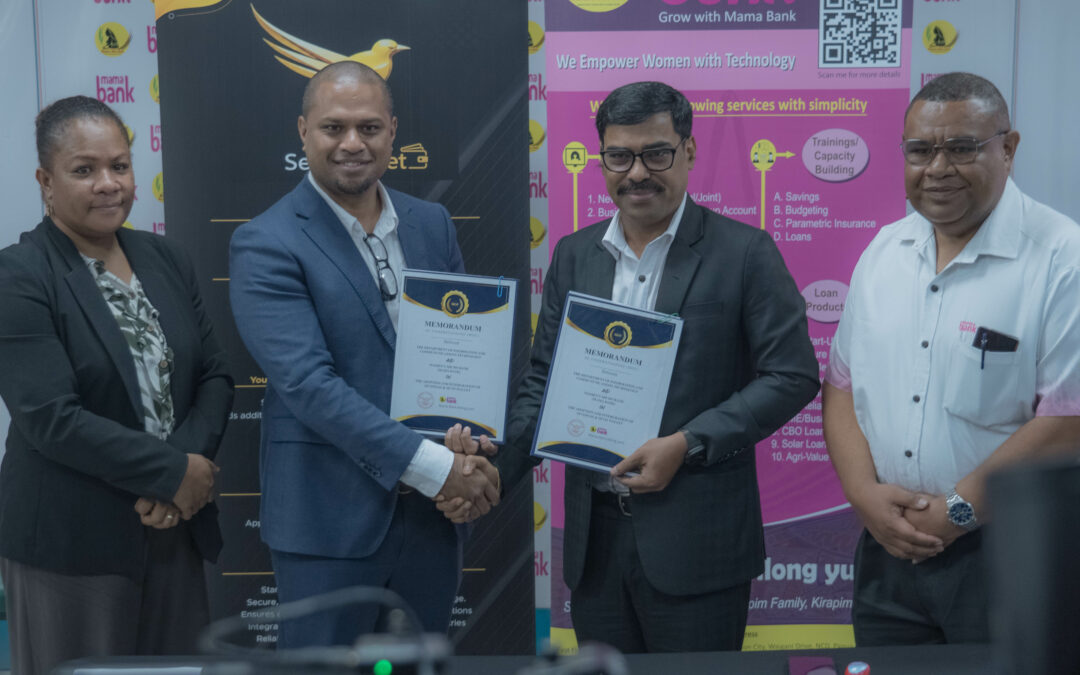
The Department of Information and Communications Technology (DICT) has partnered with Mama Bank to make it easier for Papua New Guineans to open bank accounts using their digital identification credentials through SevisPass.
The partnership will allow Mama Bank to integrate SevisPass into its customer onboarding process, enabling people to use their digital identity credentials through the SevisWallet application when applying for banking services.
This will reduce the need for customers to repeatedly provide physical identification documents and personal details when opening accounts, making the process simpler and more accessible, particularly for people in rural communities.
DICT Secretary Steven Matainaho said the partnership was part of the department’s work to bring services closer to people who have traditionally faced difficulties accessing them because of documentation and identity verification requirements.
“This is really about financial inclusion as well,” he said.
Mr Matainaho explained that SevisWallet is a digital credential wallet, not a money wallet. It is designed to allow citizens to hold government-issued credentials in digital form and use them when accessing different services.
A basic SevisPass digital identity credential can be obtained through the application in about five minutes by providing a person’s first name, last name, date of birth, gender and residential address.
As the platform develops, other government-issued credentials, including driver’s licences, tax identification numbers and educational certificates, are intended to become available through the wallet.
The system also uses biometric collection and storage standards and a consent-based approach to personal information. This means citizens must give consent when their credentials are used for verification.
For Mama Bank, the partnership will help address one of the challenges of providing financial services to rural and informal communities: the time and cost involved in collecting and verifying customer information.
Mama Bank chief executive officer Gunanidhi Das said the bank traditionally had to send representatives into communities to explain account-opening requirements, collect completed forms and return to process applications.
With digital identity verification, customers will be able to provide their credentials through SevisWallet, reducing the paperwork and repeated collection of information required by the bank.
Mama Bank’s microfinance model focuses on informal and rural communities, including market vendors, cooperatives, churches and other community organisations. Its lending approach includes small loans of K300, K500 and K1,000 for people who may not have previously accessed formal credit.
Customers also receive financial literacy training to help them manage their money, develop savings habits and build a financial record that can support access to larger loans and small business financing.
The bank has found that women who previously did not have bank accounts are actively saving when given access to formal banking services. About 50 per cent of the savings mobilised through its lending activities have come from these women.
Mr Das said reducing the cost of reaching rural customers would allow the bank to direct more resources towards its customers and make its services more affordable.
The digital credential system will also give customers greater choice as other financial institutions integrate with SevisPass. The same verified credentials can be used to apply for services with participating institutions, without having to repeatedly complete the same identification process.
Mama Bank intends to extend the benefits of the partnership to customers across all 22 provinces. Existing customers will also be able to use their digital credentials to access other services as the platform expands.
Meanwhile, this partnership is one of DICT’s wider work to connect government and private-sector services through digital identity, making it easier for citizens to access services without unnecessary paperwork, repeated visits or long queues.