

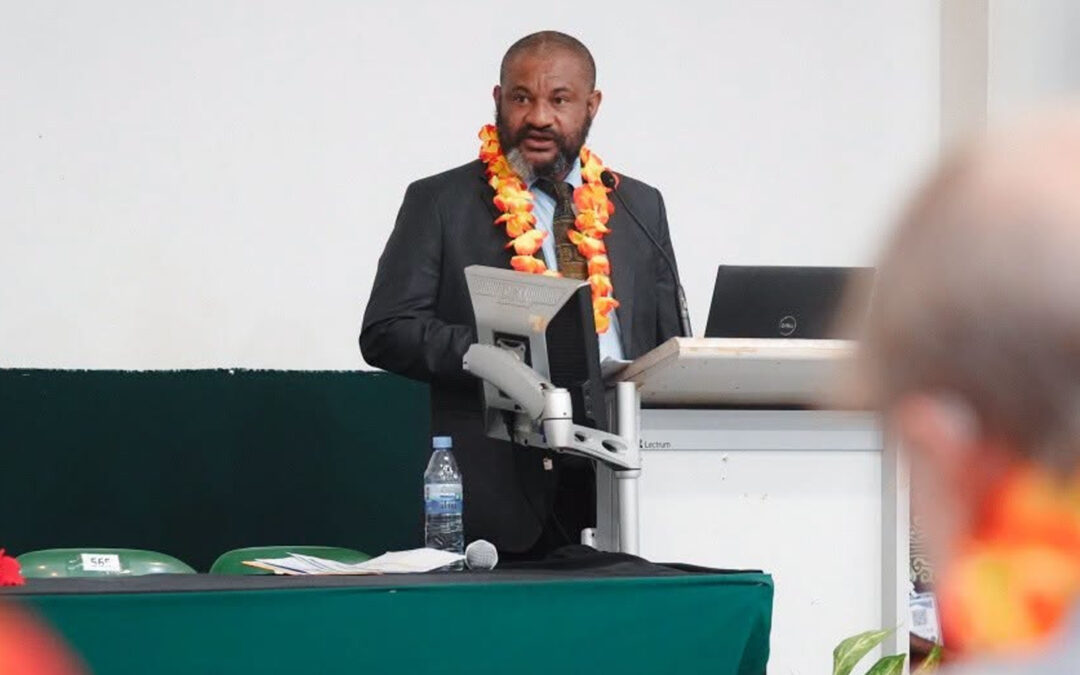
THE National Information and Communications Technology Authority (NICTA) has challenged students at Divine Word University (DWU) to use their skills to develop solutions to problems facing Papua New Guineans.
NICTA chief executive officer Lume Polume made the call while delivering the keynote address at the university’s 21st Information Systems Symposium in Madang.
Mr Polume also congratulated DWU on its 30 years of contribution to education in Papua New Guinea and encouraged students to play a bigger part in shaping the country’s digital future.
He urged students to look at problems in their own communities and develop solutions that can work in the PNG context.
“Do not wait for somebody outside Papua New Guinea to define our problems and sell the solution back to us. Start with the people around you,” Mr Polume said.
He also spoke about the changing role of technology and artificial intelligence, saying students should look beyond simply knowing how to use new tools.
“Your value will not come simply from knowing how to prompt a machine. It will come from understanding a problem and building something people can trust,” he said.
Mr Polume said PNG could purchase technology from overseas, but the country needed to build its own skills and capacity to use that technology effectively.
“We can buy technology, but we cannot import national resilience. That capability must be built in Papua New Guinea, and much of that supply must come from our universities,” he said.
He said NICTA had continued to work with higher education institutions through programmes aimed at developing ICT skills and human resources in the country.
NICTA supported the 21st Information Systems Symposium as a silver sponsor, reflecting its support for ICT education and the development of future technology professionals.
Mr Polume encouraged the students to use their education and skills to become contributors to PNG’s growing digital economy.
He said universities had an important role to play in preparing young Papua New Guineans who could develop local ideas and apply technology to the country’s needs.