

Friday 25th September, 2026
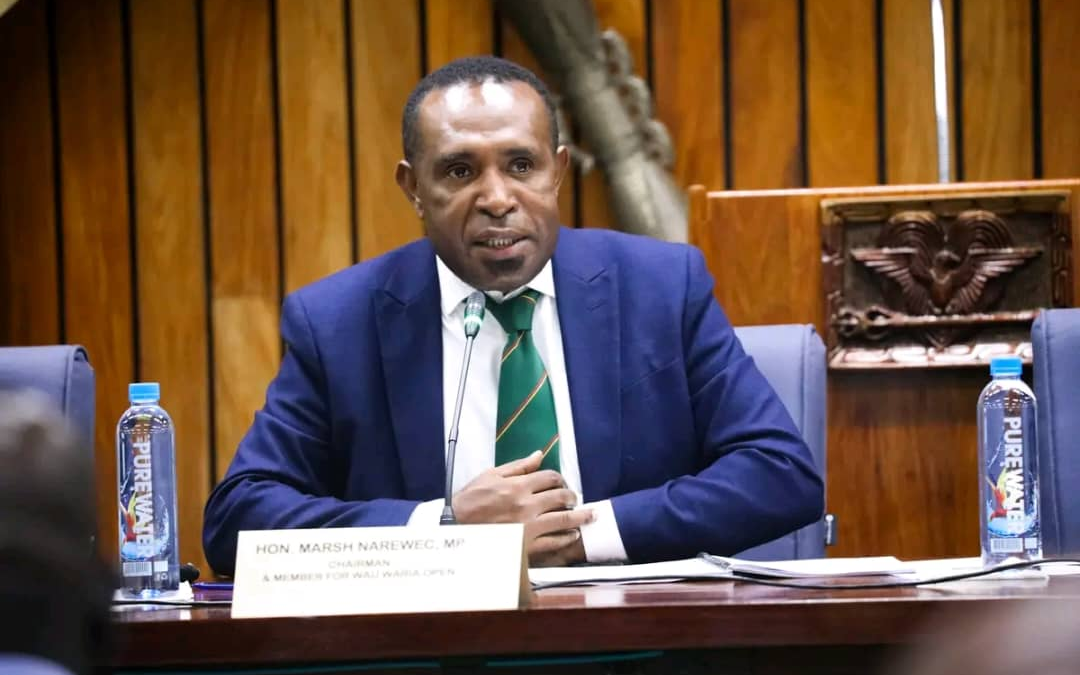
PERMANENT Parliamentary Committee on Communications chairman Marsh Narawec and member for Wau Waria has called for greater funding and resources for the Department of Information and Communication Technology (DICT), saying the department cannot be expected to deliver major reforms without the capacity to do the work.
Narawec made the call during the committee’s multi-agency hearing at Parliament yesterday, where agencies reported on progress against 40 recommendations endorsed by Parliament.
He said about 80 per cent of the recommendations were related to legislation and policy, much of which required work by DICT.
“If we are concerned about the space of technology, AI and social media and all this, this department needs to be funded,” Narawec said.
DICT Deputy Secretary for Policy and Emerging Technologies Mr. Flierl Shongol told the hearing that the department had an upgraded structure with 260 positions, but the full structure was not funded.
He said DICT submitted its funding requirements for the full structure but knew it would not receive the full amount, forcing the department to prioritise its needs.
“We submit for full funding, but we know we won’t get the full amount, so we break it down and prioritize,” Shongol said.
Shongol said recruitment was expected to begin next year if sufficient funding was available.
Narawec said the funding issue was important because DICT was carrying responsibility for a large number of the committee’s recommendations, including developing policies and legislation for the rapidly changing technology sector.
“If we are concerned about the space of technology, AI and social media and all this, this department needs to be funded,” he said.
The recommendations being followed up include work on misinformation and social media, artificial intelligence, digital and media literacy, government information and access to information.
DICT told the committee that a Social Media Policy had already been adopted and work was underway with the Office of Censorship and other agencies to improve coordination around misinformation and online harm.
The department is also developing an artificial intelligence strategy, while considering how AI principles could be incorporated into existing digital, data protection and cybersecurity frameworks.
Another recommendation calls for a national digital and media strategy. Shongal acknowledged there was a gap in having a government-wide framework and said the strategy would now be placed in the department’s work pipeline.
DICT is also working on standards for government websites and social media use across public agencies, including guidance for public relations officers and digital officers.
The department told the committee it was also laying the groundwork for the dissemination of government information and future right-to-information requirements.
Narawec said the policy and legislative work would require resources, particularly where consultation and drafting were involved.
He said around 10 to 15 pieces of legislation and policies needed to be developed and consulted on.
“We can do all this technical stuff, but it’s the legislation and policies that sets the foundation of technical technology development,” Narawec said.
The committee has asked DICT to provide a report outlining its staffing numbers, funding position, budget requirements and capacity needs.
Narawec said the committee would follow up on the report and seek to have the department’s resource requirements considered in the 2027 Budget.
The hearing is part of Parliament’s review of 40 recommendations covering communications laws, digital safety, misinformation, social media, artificial intelligence, digital literacy and access to government information.