

Friday 29 May, 2026
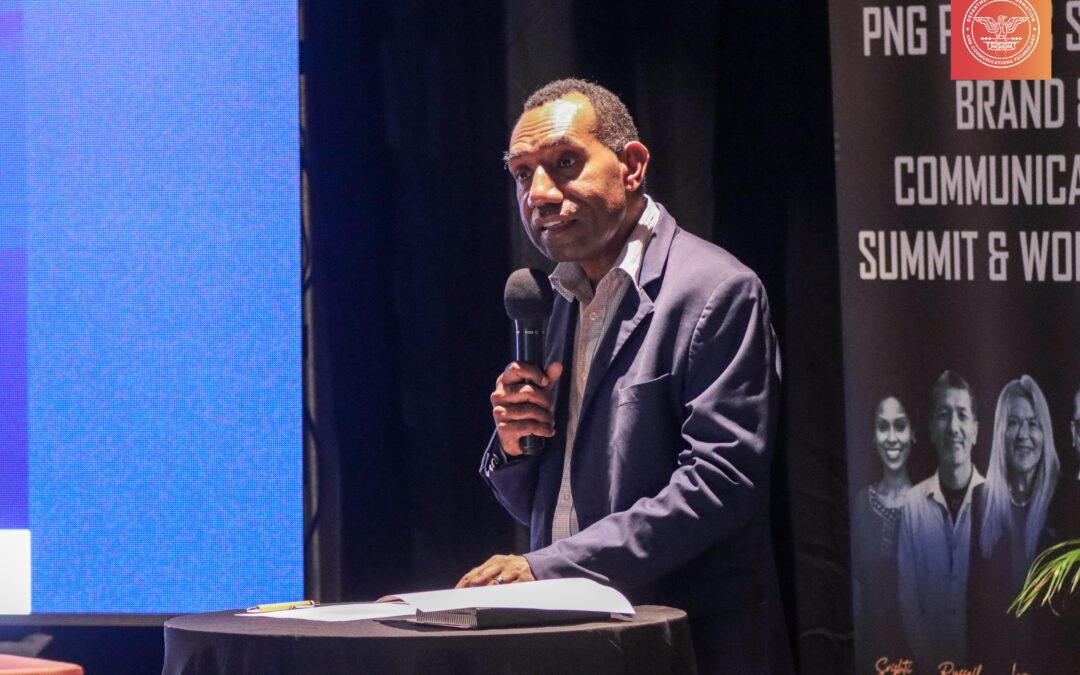
Rampant disinformation and the misuse of artificial intelligence are driving a severe national trust crisis, forcing the state to reclassify public communication as a critical national security and economic capability. This was revealed today by Department of Information and Communications Technology (DICT) Deputy Secretary Mr. Flierl Shongol at Apec Haus, during the formal opening of the two‑day Public Sector Branding and Communications Summit, part of PNG Public Relations Week 2026.
As the official government partner for the Summit and Workshop, DICT through Mr Shongol emphasized on the urgent need to strengthen the capacity of communications and public relations officials in the public sector. The initiative is tied directly to PNG’s digital transformation agenda which aims to build resilience against disinformation.
Mr. Shongol warned that weak state branding and fragmented communication channels are directly stalling government programs and eroding public confidence. He stressed that disinformation is no longer a peripheral issue but a direct threat to governance and national stability.
To counter this, the DICT is leading a strategic communications overhaul that compels state agencies to abandon defensive, secretive public relations practices in favor of full transparency. Guided by the National Media Development Policy 2024 and the forthcoming National Freedom of Information framework, the government is mandating comprehensive training for public information officers. The aim is to eliminate the entrenched habit of hiding public data behind false “confidentiality” labels and instead foster a culture of openness.
Recognizing the state’s current deficit in public trust, the summit is being used to bridge gaps between government and society. Public media teams are being directed to adopt proven, empathy‑driven branding strategies from private sector leaders who have successfully built credible consumer relationships.
Mr. Shongol emphasized that modern governance can no longer rely on isolated press statements or sporadic announcements. While digital infrastructure and data systems are expanding, he noted that technology alone cannot transform a nation—people must understand why reforms matter.
Ultimately, the government’s radical communication shift aims to build a credible, citizen‑focused brand that transforms ordinary citizens into informed participants in development. By strengthening trust and projecting a clear, consistent reputation, Papua New Guinea seeks to safeguard national unity while attracting international investment and tourism.